
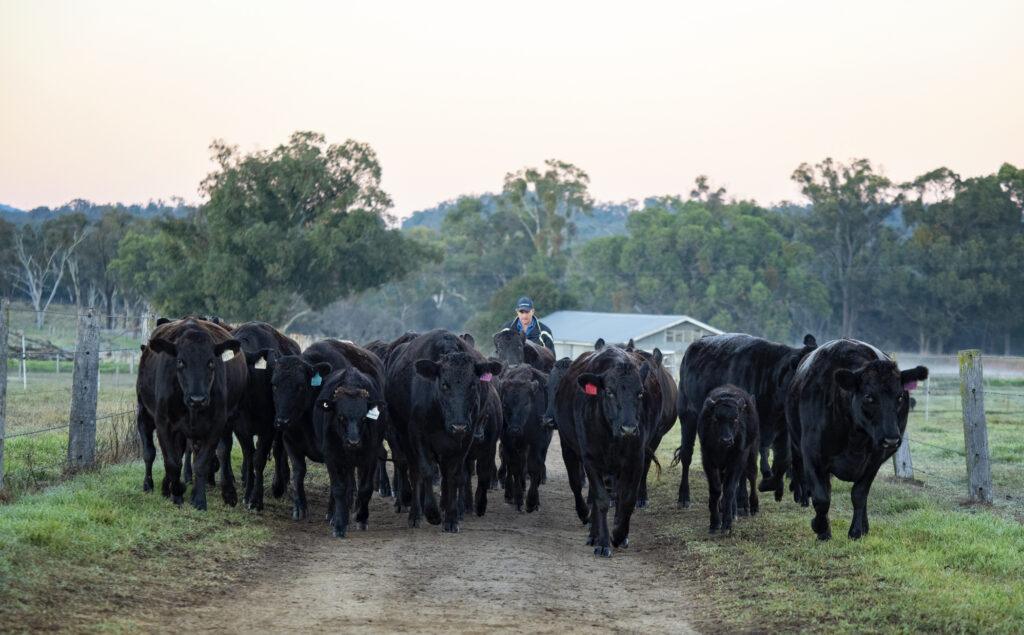
Across much of Australia, the decisions and actions taken during winter actively shape the reproductive performance of the coming year and often several years beyond.
While joining and calving naturally attract most attention, the nutritional and management decisions made through winter frequently have the greatest influence on fertility outcomes. In many breeding herds, females may appear to be coping adequately during this period, yet subtle nutritional decline can already be compromising future reproductive performance long before obvious weight loss or poor body condition becomes visible.
For producers navigating seasonal variability, rising input costs and increasing pressure on feed resources, winter management is no longer simply about survival. It is about protecting the business’s reproductive engine.
Seasonal pressure and fertility
Pasture growth declines significantly during winter across most grazing regions. Unless cereal crops or forage systems are established successfully, cattle are often reliant on standing dry feed of relatively low nutritional value.
When seasons have already been dry, winter becomes particularly challenging because standing feed reserves may be limited before the colder months even begin.
At the same time, most breeding females are either in mid to late gestation or entering early pregnancy, depending on mating systems. During these stages, cows can lose body condition without immediately affecting the pregnancy itself. As a result, nutrition is often given less priority than it deserves during winter.
The problem is that fertility is extremely sensitive to nutritional stress and negative energy balance.
When feed quality declines or energy intake becomes inadequate, the cow’s biological priority shifts away from reproduction toward maintenance and survival. Cycling activity slows, conception rates decline and pregnancy losses may increase. In younger females, poor nutrition can delay puberty or reduce joining success entirely.
Importantly, these effects are not always immediately visible. A herd may appear to be coping through winter while reproductive performance is already being compromised months before joining.
By the time disappointing pregnancy rates are identified later in the season, the opportunity to intervene has usually passed.
Condition score drives fertility
Body Condition Score (BCS) remains one of the most reliable practical indicators of reproductive potential.
Scored on a scale from 1 (poor) to 5 (fat), BCS reflects the nutritional reserves available to support cycling activity, conception, pregnancy maintenance and lactation.
Females entering joining in poor condition will almost always underperform compared with cows carrying adequate reserves.
The aim should generally be to ensure females reach a BCS of at least 3 at calving and at an absolute minimum of 2 at joining. Maintaining condition through calving and early lactation supports:
- Earlier return to cycling
- Improved conception rates
- Better colostrum quality
- Increased calf survival
- Improved milk production
Bulls must also be considered. Bulls should ideally maintain a body condition score of at least 2.5 to protect semen quality and mating performance. Importantly, nutritional stress can persistently affect semen quality for up to 2 months after nutrition has been corrected.
Reproductive performance is cumulative. Fertility is rarely determined by a single event during joining. Rather, it reflects the nutritional and management pathway leading into the breeding season.
The extra energy cost of winter
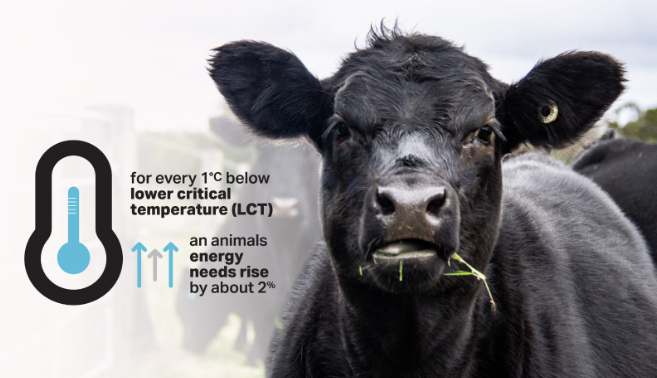
Winter feeding programs are further complicated by the additional energy cattle require to maintain body temperature.
For every 1°C drop below the animal’s Lower Critical Temperature (LCT), dietary energy requirements increase by approximately 2%. The LCT varies depending on coat cover, body condition, age and wind chill, but in many situations may begin at temperatures below 15°C.
Cold, wet and windy conditions can dramatically increase maintenance energy requirements, in some cases doubling them.
This means cattle can continue losing condition even when the feed appears visually adequate.
Strategic supplementation matters
Supplementation during winter is often critical, but effective supplementation begins with understanding the nutritional value of the feed already available.
Feed testing of pasture, hay or silage allows producers to target supplementation programs more accurately according to:
- Pregnancy status
- Stage of gestation
- Lactation status
- Age and growth requirements
- Without testing, supplementation can easily become either inadequate or unnecessarily expensive.
Strategic nutrition is particularly important for young breeders and first-calf cows. Wet cows require substantially more dietary energy and protein than dry cows, while first-calf females also need additional nutrients to continue their own growth toward mature body size.
Early weaning: One of the most powerful tools
Early weaning remains one of the most effective nutritional management tools available during difficult seasons.
Lactation is extremely demanding nutritionally. Removing the calf substantially reduces the cow’s energy and protein requirements, allowing the breeder condition to stabilise or recover before reproductive performance is compromised.
In most situations, it is more economical to feed cows and calves separately than to feed the cow-calf unit together. Dry cows can maintain condition on lower-quality feed, while higher-quality supplements can be directed toward growing calves.
Where possible, calves should ideally weigh around 100kg or be approximately three months old before weaning. Earlier weaning can be successful but generally requires higher quality specialised feeding and more intensive management.
Importantly, weaning before cows fall below a body condition score of 2.5–3 can significantly improve rebreeding performance and conception rates in the following joining period.
Pregnancy testing and herd prioritisation
Pregnancy testing becomes even more valuable during difficult seasons.
At the most basic level, identifying empty females allows non-productive cows to be culled, immediately reducing pressure on limited feed resources.
However, the value of pregnancy testing extends well beyond identifying empties.
Ageing pregnancies enable females to be grouped by calving periods, allowing a more strategic allocation of pasture and supplements. Where herd reductions are necessary, pregnancy ageing also helps producers retain females at preferred stages of gestation. Foetal sexing can provide additional management flexibility. Knowing which cows are carrying bull or heifer calves allows producers to align decisions with future breeding and marketing objectives.
Assisted Reproductive Technologies still depend on nutrition
The use of reproductive technologies such as Fixed Time Artificial Insemination (FTAI) and Embryo Transfer (ET) continues to expand rapidly across both seedstock and commercial herds.
However, regardless of how advanced the reproductive program may be, fertility outcomes remain heavily dependent on nutrition and energy balance.
Females joined through AI or ET programs require an increasing level of nutrition leading up to and during joining. When cows are losing condition or are under nutritional stress, conception rates can decline rapidly despite significant investment in semen, embryos, and genetics.
Hormonal treatments can assist in lower-condition females, particularly where higher numbers of non-cycling cows are present. The inclusion of eCG products, such as Novormon, in synchronisation programs can improve follicle development and cycling activity in females in lighter condition.
However, reproductive hormones cannot fully compensate for poor nutrition, particularly in females in deep anoestrus.
Ultimately, reproductive treatments should complement sound nutritional management, not replace it.
Sexed Semen and strategic herd management
One of the more significant developments in recent years has been the increasing use of sexed semen as part of broader herd management and seasonal decision-making.
For seedstock producers facing difficult seasons, male sexed semen provides an opportunity to substantially reduce breeder numbers while still maintaining confidence in producing sufficient sale bulls in future years.
Rather than joining the entire herd, many operations strategically retain elite females and use male-sexed semen to concentrate bull production from their highest-genetic-merit cows.
Commercial producers are increasingly applying similar strategies.
During drought or herd-reduction phases, some producers are using male sexed semen to maximise steer production and capture steer market premiums without generating large numbers of replacement heifers that require retention and additional feed.
Conversely, when seasonal conditions improve and herd rebuilding begins, female sexed semen is increasingly being used to accelerate breeder recovery by increasing the proportion of replacement heifers entering the system.
MOET and IVF: Preserving genetics through difficult seasons
Embryo technologies such as Multiple Ovulation Embryo Transfer (MOET) and In Vitro Fertilisation (IVF) are also becoming increasingly important management tools during challenging seasons.
Where significant breeder sell-downs become necessary, embryos from elite females can be collected and stored, preserving valuable genetics for future herd rebuilding once seasonal conditions improve.
This highlights how reproductive technologies are no longer simply about improving conception rates. They are increasingly being integrated into broader business resilience, herd structure and long-term breeding strategy.
Timing is often the difference
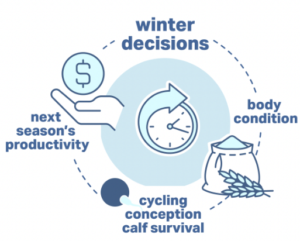 One of the most common mistakes during difficult seasons is simply acting too late.
Whether the decision involves supplementation, early weaning, reducing stocking pressure or prioritising high-value breeders, timing is critical.
Once females enter a severe nutritional deficit, recovery becomes progressively more difficult and expensive. The producers who consistently achieve strong reproductive outcomes across variable seasons are often those who act early, before nutritional decline becomes severe.
Protecting the breeder condition before fertility is compromised is almost always more effective than attempting to recover reproductive performance later.
Looking ahead
The decisions made during winter have a profound influence on the herd’s future productivity.
They affect joining performance, calving spread, calf survival, milk production and rebreeding success well into the following season.
There is no single formula that suits every operation. Seasonal conditions, feed base, breeder numbers and business objectives all influence the most appropriate management pathway.
What remains consistent, however, is that reproductive performance is shaped by management decisions, particularly during periods of seasonal pressure.
For producers facing another variable winter, the challenge is not simply getting cattle through the season. It is protecting the fertility and productivity that will determine the business’s long-term performance.
